All about the community of model railroading and rail enthusiasm
July 3, 2012 / Updated August 29, 2012

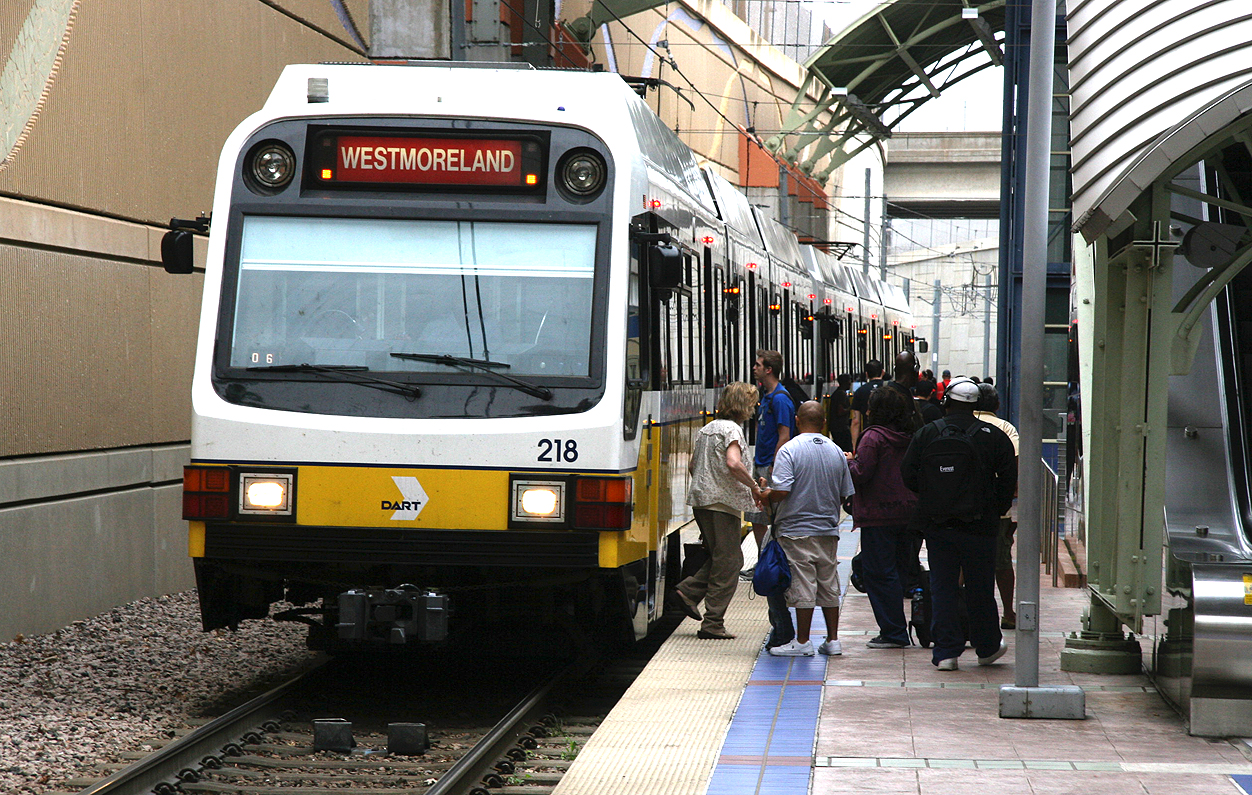
New Stadler cars meet DCTA’s Rail Diesel Cars (RDCs) at the Highland Village/Lake Lewisville Station along I-35E shortly after their June 16 debut.Courtesy Robert Lemley
By Tim Blackwell /
Cowcatcher Magazine
DCTA began running the first of two four-car sets of its Stadler GTW diesel-electric cars on June 16, less than two weeks after being granted an alternative design waiver by the Federal Railroad Administration to start operating the cars that can run along traditional, heavier rail lines and will expand the agency’s reach.
The cars, which likely will be fully integrated on DCTA’s A-train line by September, are the first lightweight, low-floor vehicles permitted to run in U.S. rail corridors with freight trains and commuter rail cars. They are splitting morning and evening service with DCTA’s Rail Diesel Cars (RDCs) that have been in service since the 21-mile line from Denton to Carrollton opened a year ago.
Administrator Joseph Szabo presented DCTA President Jim Cline the waiver on the platform of Union Station on June 4 in front of two cars that were on display during the American Public Transportation Association light rail conference. Some 1,500 rail transportation professionals from around the world attended the four-day conference.
 Cline anticipates most of the fleet of 11 diesel-electric GTW 2/6 articulated vehicles to be fully commissioned by Aug. 20 when the A-train rolls out a revised schedule that for the first time includes midday Denton-to-Carrollton service.
The waiver further solidifies DCTA’s participation in North Texas’ budding regional rail system with Dallas Area Rapid Transit and the Fort Worth Transportation Authority.
“It allows us to operate with the RDCs,” Cline said after the waiver was presented, “so over a period of time we’re going to phase in (the Stadlers), but it allows us to keep the RDCs as an option if we need to expand service or if we need to have spares. The other part is that it allows this vehicle to operate on other parts of the regional rail system.”
The safety-enhanced cars will better move people to special events across the region.
Cline cited Super Bowl XLV in 2011 when the Trinity Railway Express was the only rail option capable of running on Union Pacific’s line near the stadium. Riders had to transfer from other transit options, including DART, on the way to Arlington.
With the Stadler cars, opportunities could open for passengers to use one rail system across multiple corridors to get to the big game.
That, Cline said, is regional rail at its best.
“If you think about the Super Bowl, you think about a big event in the region. Having a car that can only run in a very select area doesn’t help us a lot. This provides options, particularly in a community that is not real crazy about having full-up locomotives and large rail cars. This is more people-scale. Not only is it a regional solution, it’s a national solution.”
DCTA has been working with the FRA to obtain the waiver since 2009.
The cars are touted for their three-stage crash absorption system, and all but one have been delivered. The last unit was delayed after being damaged in a wreck involving the transport truck after leaving Stadler’s manufacturing facility in Switzerland. Cline said the car should arrive before midday service begins.
The energy-efficient cars are 134 feet long, seat 104 and can reach 75 mph. They are fully ADA compliant with wide entrance doors for faster boarding by riders with disabilities.
The second four-car set rolled out June 23.
SEE THE JULY/AUGUST ISSUE FOR A COMPLETE REPORT ON HOW DCTA, DART AND TRE ARE JOINTLY WORKING ON EXPANDING THE NORTH TEXAS REGIONAL RAIL NETWORK