All about the community of model railroading and rail enthusiasm
April 15, 2026 / Updated May 13, 2026
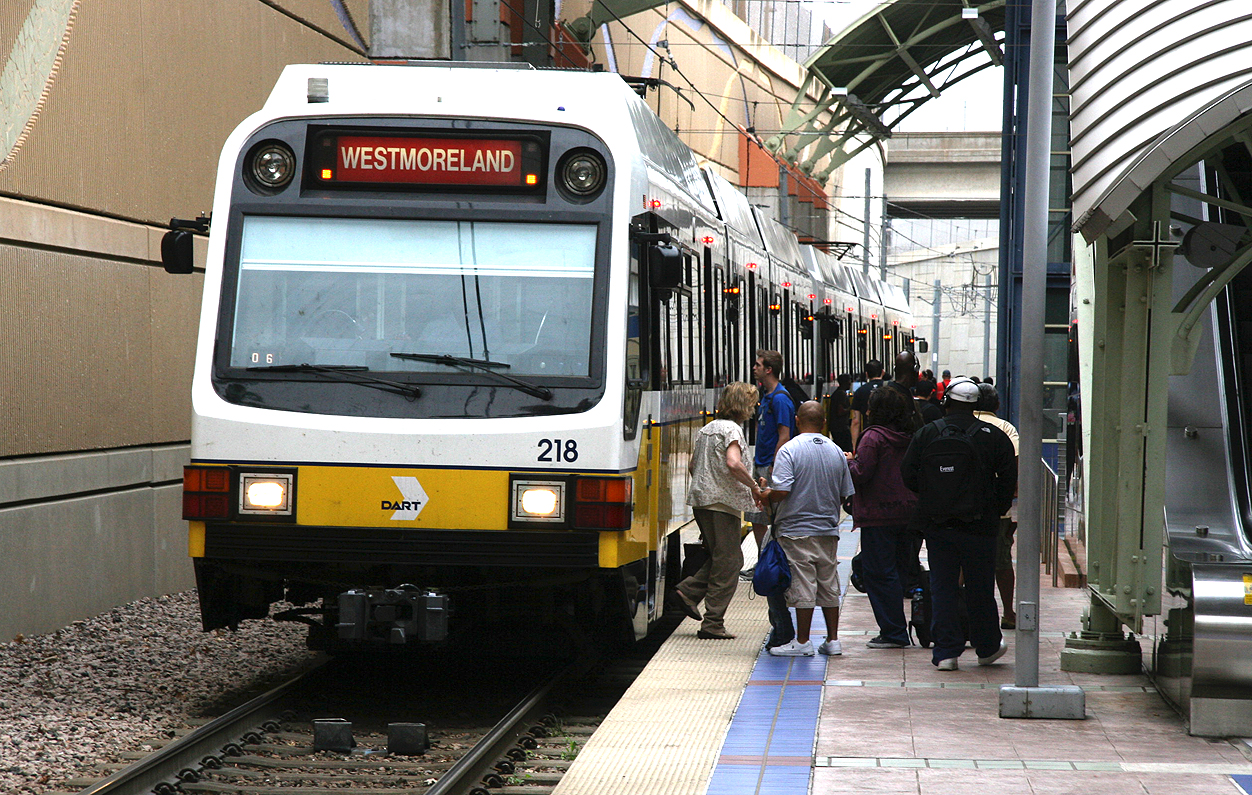
UPDATED May 13, 2026 – One of the nation’s longest-running transit agencies is navigating choppy waters while simultaneously establishing new leadership. The Dallas Area Rapid Transit Board of Directors terminated president and CEO Nadine S. Lee about two weeks after she announced in March that she would not pursue an extension to her contract.
A familiar face has since been named interim president and CEO.
Lee took the DART job in 2021 and planned to step down this September. Her decision came as nearly half of the 13 member cities challenged the transit agency’s value earlier this year.
Within a few weeks after Lee’s departure the Board appointed David Leininger as interim president and CEO, effective May 4, 2026, DART said in a statement. His appointment comes after Gene Gamez, who has been with the agency for over 26 years, was appointed acting president and CEO in April.
With over four decades of public service, Leininger returns to DART, fulfilling the same transitional role he previously served in from 2020 to 2021. He also served the agency for nine years as its CFO.
Leininger will oversee day-to-day operations, support ongoing strategic initiatives and work closely with the Board, staff and regional stakeholders while DART’s future with three member cities is being considered.
As Lee entered the final eight months of her contract in February, six of the member cities announced they would hold elections in May to leave the system. Farmers Branch, Plano, Irving, Addison, Highland Park and University Park said they were not receiving enough value from their contributions to DART’s $850 million annual revenue. DART collects a one-cent sales tax from member cities to fund transit in their areas.
Since then, the 42-year-old public transit system and the Regional Transportation Council (RTC) agreed to grant members a 10 percent refund of their sales tax contributions as Lee worked to develop a structure to improve DART’s operations and retain full membership.
Farmers Branch, Plano and Irving called off their elections; Addison, Highland Park and University Park went to the polls May 2 and two of the cities elected to stay. Seventy percent of Highland Park residents voted to exit. DART service is expected to end May 14.
As part of the deal, DART will contribute 5 percent of sales tax paid to cities the first year and an additional 0.5 percent each year for five years. In addition, DART and the RTC approved a plan Feb. 12 to provide $75 million over five years to help fund capital projects.
With DART contributing 7.5 percent to cities and the RTC providing an additional 2.5 percent in the final year of the agreement, member cities will receive the equivalent of 10 percent of their sales tax contributions for other transportation-related needs.
Texas Rail Advocates president Peter LeCody said in a Dallas Morning News op-ed that leaving DART comes at a bad time as North Texas prepares for FIFA World Cup events in June.
“The divide not only threatens DART’s perennially strained finances but also risks isolating those communities from a growing regional economy built on connectivity,” he wrote. “We don’t need a patchwork transit network with blank spots on a map. We need a strong regional web to serve hundreds of thousands of transit-dependent citizens now and in the future.”
DART moves more than 170,000 passengers daily across 700 square miles. Other member cities include Dallas, Carrollton, Cockrell Hill, Garland, Glenn Heights, Richardson and Rowlett. The agency also operates Trinity Railway Express, which links Dallas Union Station with Fort Worth Central Station.
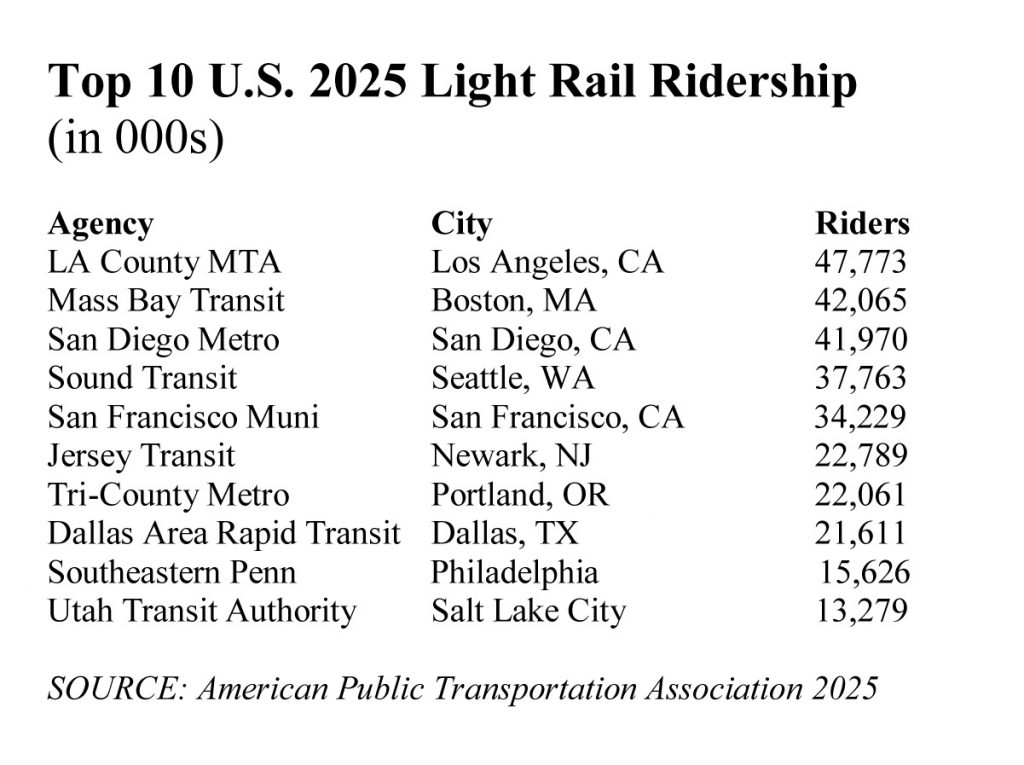
Lee joined DART the same year that the agency’s light rail system celebrated 25 years. She succeeded Gary Thomas, who retired in October 2020 as president and executive director. The U.S. had just begun digging out of the pandemic, and transit ridership across the country was significantly down from pre-covid levels.
System load has not bounced back to the 67.9 million combined riders, including on light rail and buses, posted in 2019. Ridership was 52.8 million in 2025, about 8 percent below the national average, according to the American Public Transit Association.
U.S. public transit ridership stood at 85 percent of pre-pandemic levels at the end of fourth-quarter 2025; rail modes had recovered to 72 percent of 2019 levels.
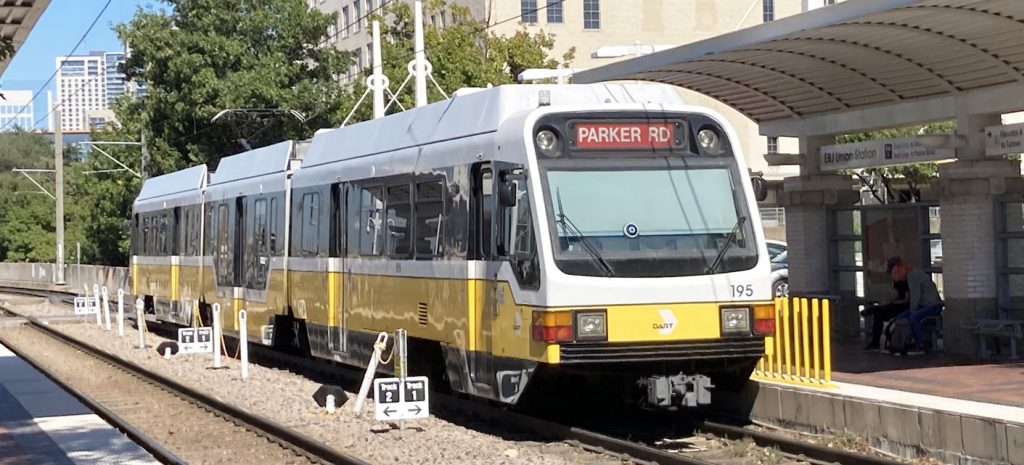
Ridership on DART light rail, one of the longest U.S. systems at 93 miles, was about 79 percent of pre-pandemic levels at 22.2 million in 2024 before tailing off to 21.6 last year.
“It has been the honor of my career to lead this extraordinary organization and to work alongside more than 3,800 dedicated employees who move North Texas forward every day,” Lee said. “Together, we navigated one of the most challenging periods in transit history and emerged stronger, more focused and better positioned to serve our growing region.”
Board chair Randall Bryant said Lee stepped into leadership at a very challenging moment for the transit industry and helped guide DART through recovery while setting a clear strategic direction for the future.
“Her leadership strengthened operations, improved safety and reliability, and positioned DART to remain a critical mobility partner for the region.”
A national search for DART’s new president and CEO is underway.
In the meantime, Leininger finds himself in familiar waters. He ran DART for several months after Thomas retired in 2020.
“I am honored to serve in this role once again and support the dedicated employees of DART,” Leininger said. “Together, we will remain focused on providing dependable transit options, enhancing the customer experience, and advancing the agency’s mission to connect people, places, and opportunities across our region.”
Among DART’s member cities are Dallas, Addison, University Park, Plano, Farmers Branch, Garland, Irving, Carrollton, Richardson, Rowlett, Cockrell Hill and Glenn Heights.