All about the community of model railroading and rail enthusiasm
January 21, 2026
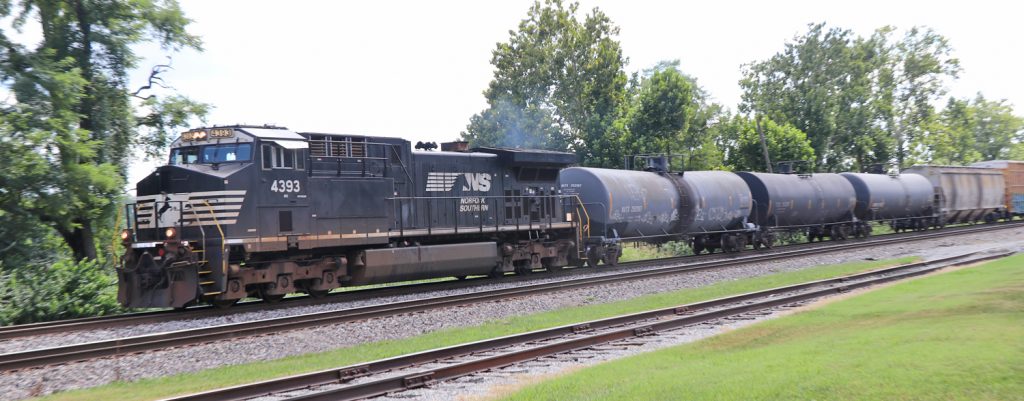
The Surface Transportation Board (STB) unanimously rejected last week the major merger application filed by Union Pacific and Norfolk Southern in December for a combined transcontinental railroad, saying the bid is incomplete because it does not contain certain information required by regulations.
STB rejected the application because UP and NS did not adequately provide market share projections and didn’t submit a complete merger agreement, including explanation of the regulatory burden UP would accept before it could leave the deal on the table. Also, a related application to control the Terminal Association of St. Louis was incorrectly classified.
“Under the law, the Board therefore must reject the application, and does so without prejudice to applicants refiling a revised application remedying the deficiencies identified in the decision,” STB said in a statement Jan. 16. “Today’s decision is based solely on the incompleteness of the December 19 application and should not be read as an indication of how the Board might ultimately assess any future revised application.”
Under 49 C.F.R. § 1180.7(b), applicants are required to submit “full system” impact analyses that include actual and projected market shares of certain revenues and traffic volumes demonstrating, among other things, the impacts of the transaction on competition. The application must include projections that the merger will result in traffic growth, including diversions, and state that the full impacts of the transaction will not be realized until three years after the deal in approved.
UP and NS projected market shares only the sum of actual 2023 estimated market shares by the railroads, STB said.
“The application does not contain future market share projections showing the combined effects of merger-related growth, diversions, and merger-influenced and other changes to market conditions that applicants anticipate,” STB said, adding that the market impact analyses “must necessarily project market shares beyond the transaction’s consummation date.”
STB said market-share projections are necessary because any railroad combination, including an end-to-end combination, “entails a risk that the merged carrier would acquire and exploit increased market power,” per 49 C.F.R. § 1180.1(c)(2)(i).
In addition, under 49 C.F.R. § 1180.6(a)(7), applicants must provide copies of “any contract or other written instrument entered into, or proposed to be entered into, pertaining to the proposed transaction.”
STB also noted that the merger submission must include the “Agreement and Plan of Merger” document but does not include certain schedules and documents that are expressly made part of the merger agreement. The railroads did not justify why they withheld these materials, STB said.
One of the merger agreement schedules, referred to as “Schedule 5.8,” describes the contractual term “Materially Burdensome Regulatory Condition,” which, if imposed by the board or a court, would give UP the contractual right to walk away from the merger agreement.
In addition, STB found that the application to acquire control of the Terminal Railroad Association of St. Louis is a significant transaction, not a minor transaction as submitted. Finally, STB said the decision identifies several technical, minor issues that are to be addressed in any revised application.
UP and NS are permitted to file a revised application, which STB will review. The railroads must file a letter in the docket by Feb. 17 indicating if and when they anticipate filing a revised application.
Any statutory time periods that follow from the timing of the filing of the application will be computed from the filing date of any revised application, if it is accepted.
The decision came a few days after UP CEO Jim Vena responded to recent criticism over the railroad’s proposed merger with NS and outlined the benefits of a transcontinental railroad recently at the winter meeting of the Midwest Association of Rail Shippers (MARS).
The application included a record-setting 2,000 letters of support from customers, public officials, industry associations and unions, UP noted at the meeting.
“We knew our competitors would oppose the merger, and we understand why,” he said. “This is a transformational merger that will inject more competition into the railroad industry and force them to enhance their service, reduce their price, or do both.”
CN said in December that the proposed merger fails to demonstrate that it would enhance competition or generate significant public benefit and that it falls well below both the 2001 and older merger rules.
Protecting competition is essential to keep costs down and the economy sound, CN said. “The fact is that the merger would reduce rail transportation options for customers while creating a single entity that controls more than 40 percent of the U.S. freight rail market.
“Without real railroad competition, prices go up and consumers lose.”
CN’s comments followed mounting concerns to the merger that began last fall.
Federal lawmakers voiced apprehension and BNSF Railway asked the STB for an immediate review and enforcement of conditions imposed during the UP/Southern Pacific merger nearly 30 years ago. BNSF’s petition seeks to address what the Class I railroad said in a statement is UP’s long-standing pattern of obstructive conduct that “has eroded competition and harmed customers” before approving the merger.
Others, including lawmakers and several trade associations, are urging the STB to closely scrutinize the proposed $85 billion merger. In a letter in late October, Sens. John Hoeven (R-ND) and Amy Klobuchar (D-MN) asked STB to fully probe the proposed merger to ensure competition in the rail industry for the long term.
The chemical industry has been among the most outspoken among shippers. The American Chemistry Council said in a letter to the White House in October that fewer railroads mean fewer transportation options and a UP/NS union would weaken the industry’s ability to compete with the rest of the world.
“While our opponents appear to be stuck in the past, we are taking a bold step that will reinvigorate the rail industry and make the entire U.S. supply chain stronger,” Vena said at the shippers conference. “We are not content to compete for share of a shrinking railroad industry. America needs strong, innovative railroads to shoulder the weight of a growing U.S. economy, and we are going to deliver.”
Single-line transcontinental rail service will inject new competitive energy into the railroad industry and provide stronger competition with long-haul trucking, UP says. The railroad contends that if it merges with NS customers will not lose a competitive option for their shipping.
The combination of UP in the west and NS in the east is “a classic end-to-end merger with virtually no overlap. Customers understand this, which is why more than 500 shippers provided letters of support for the application.”
UP says the merger will lower costs by reducing handoffs and using faster, more efficient and price-competitive routes.
“Opponents say the merger will drive prices up for shippers,” UP said. “They have no evidence, so they simply use it as a scare tactic. The reality is that single-line, coast-to-coast service is more cost efficient, which is a big win for U.S. businesses and consumers.”
UP cites a study by leading industry advisor Oliver Wyman that notes interline merchandise traffic moving 1,000-1,500 miles costs on average 35 percent more than comparable single-line service — just one example of the savings.
UP contends that rail service will be more reliable because of massive technology investments and that the combined company will be more resilient due to the greater availability of main line track, terminals, crews, locomotives and rail cars required to keep traffic flowing.
“We have had fantastic interactions with customers at the MARS meeting,” Vena said. “Despite what you’ll hear from our competitors and some of the association lobbyists in Washington, the customers we talk with understand the benefits of single-line service and are excited about how a transcontinental network can make them more efficient and competitive.”