All about the community of model railroading and rail enthusiasm
March 22, 2021 / Updated June 26, 2023
Canadian Pacific Railway is acquiring Kansas City Southern for $29 billion (USD) in stock and cash, creating North America’s first rail network connecting Canada, the U.S. and Mexico, the companies announced Sunday.
The new company will be called Canadian Pacific Kansas City (CPKC).
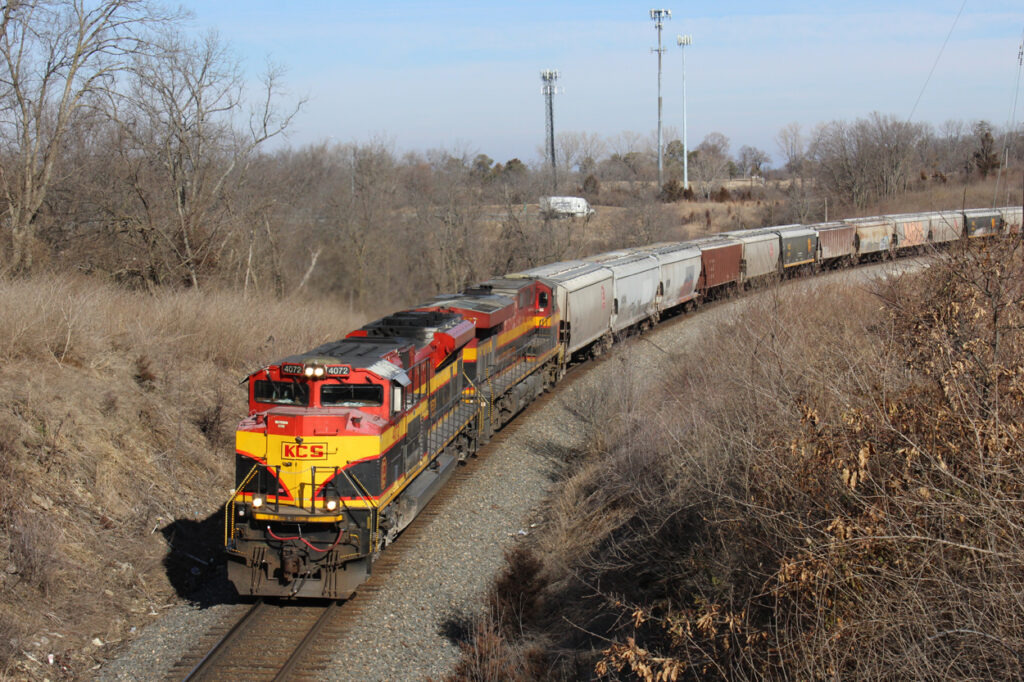
While remaining the smallest of six U.S. Class 1 railroads by revenue, the combined company will be much larger and more competitive, operating approximately 20,000 miles of rail, employing close to 20,000 people and generating revenues of approximately $8.7 billion based on 2020 numbers.
The deal values KCS shares at $275 each — 23 percent above Friday’s close — and is subject to approval of the U.S. Surface Transportation Board. CP will assume $3.8 billion in KCS outstanding debt, valuing the deal at $25 million.
Boards from each company unanimously approved combining. Following the closing into a voting trust, KCS common shareholders will receive 0.489 of a CP share and $90 in cash for each KCS common share held. Preferred shareholders will receive $37.50 in cash for each KCS preferred share held.
The combined network’s new single-line offerings will deliver expanded market reach for customers served by CP and KCS, provide new competitive transportation service options, and support North American economic growth, the companies said in a release.
The network, which has no overlap between the companies, is likely to increase industry price competition, analysts said.
Grain, automotive, auto parts, energy, intermodal and other shippers will benefit from the increased efficiency and simplicity of the combined network, the companies said. Grain is CP’s largest revenue-producing commodity and has been bolstered by a strong harvest beginning in fall 2020.
The deal is expected to create jobs across the combined network. Efficiency and service improvements are expected to achieve meaningful environmental benefits.
“This transaction will be transformative for North America,” CP President and Chief Executive Officer Keith Creel said in a statement. “This will create the first U.S.-Mexico-Canada railroad, bringing together two railroads that have been keenly focused on providing quality service to their customers to unlock the full potential of their networks. CP and KCS have been the two best performing Class 1 railroads for the past three years on a revenue growth basis.”
Creel will serve as CEO of the combined company, which, once approved, will operate from Calgary, Canada. Kansas City, MO, where KCS is based, will be designated the U.S. headquarters, and Mexico headquarters will remain in Mexico City and Monterrey. Minneapolis-St. Paul, which has CP offices, will remain an important base of operations.
Four KCS directors will join CP’s expanded board.
CPKC will connect premier ports on the U.S. Gulf, Atlantic and Pacific coasts with key overseas markets. New single-line hauls across the combined company’s continent-wide network will offer more reach.
CP and KCS interchange and operate an existing shared facility in Kansas City, MO, which is the one point where they connect. By joining forces, interchanging will be streamlined to improve efficiency and reduce transit times and costs. Some traffic between KCS-served points and the upper Midwest and western Canada will bypass Chicago via the CP route through Iowa. Doing so potentially contributes to reducing rail traffic, fuel burn and emissions in Chicago, an important hub city, the companies said.
“KCS has long prided itself in being the most customer-friendly transportation provider in North America,” said KCS President and Chief Executive Officer Patrick J. Ottensmeyer. “In combining with CP, customers will have access to new, single-line transportation services that will provide them with the best value for their transportation dollar and a strong competitive alternative to the larger Class 1s.”
According to the companies, the new single-line routes made possible by the transaction are expected to shift trucks off crowded U.S. highways, yielding reduced highway traffic, lower emissions, and less need for public investments in road and highway bridge repairs. In the Dallas to Chicago corridor alone, the synergies created by this combination are expected to result in meaningful reduction in truck traffic on publicly funded highways.
CP has joined other railroads in becoming players in railroad sustainability, and is currently developing North America’s first line-haul hydrogen-powered locomotive.
KCS, the smallest of North America’s seven Class I railroads, has a key connection to Mexico and has been the subject of mergers in recent years. The KCS network extends from the Midwest deep into Mexico with access to Gulf of Mexico ports, including Altamira, Tampico, and Veracruz.
Last summer the company’s stock soared on speculation about a potential acquisition bid from BNSF Railway or Union Pacific. BNSF’s interest in acquiring KCS goes back to 2000.
KCS’s roots trace to 1887, when Arthur E. Stilwell founded the company and incorporated the Kansas City Suburban Belt Railway with Edward L. Martin. Ten years later, Stilwell completed the Kansas City, Pittsburg and Gulf Railroad Co. (KCP&G) with a route running not east and west but north and south from Kansas City to Shreveport, LA, terminating at Port Arthur, TX, which is named for him.
In 1900 KCP&G became the Kansas City Southern Railway Co. In 1995 KCS entered into an agreement with Grupo TMM, S.A. de C.V., a Mexican-based ocean shipping and logistics company, to pursue the concessions of one of Mexico’s soon-to-be privatized rail lines. KCS also purchased 49 percent stock interest in MexRail Inc., owner of all the stock of Texas-Mexican Railway Co. (Tex Mex). Tex Mex operates between Laredo and Corpus Christi, TX, and provides a link between the United States and Mexico via the International Bridge at Laredo.